

Shopping with targeted tactics lets you turn everyday buys into significant savings; you’ll use price-tracking apps, timing, coupons, loyalty programs, and negotiation strategies to stack discounts, protect against overspending, and build predictable habits that increase your long-term purchasing power.
The Principles of Savvy Shopping Alchemy
You focus on three repeatable moves: squeeze value from what you buy, leverage tools that multiply savings, and hunt opportunities where timing or information creates outsized gains. For example, pairing a 2-5% cashback card with a 10-30% promo and a price-match can turn a 15% sticker discount into 25-40% real savings; buying off-season or at end-of-quarter clearance often drops prices 30-70% compared with peak-season rates.
Core concepts: value, leverage, and opportunity
You assess value by unit cost and lifespan, then apply leverage-coupons, rewards portals, cashback cards, and bulk purchases-to shift that equation. Cashback cards commonly return 1-5% (with 5-6% category bonuses available), portal+coupon stacking can yield 20-40% effective discounts, and buying in bulk or during flash sales often lowers unit cost by 10-30%, so you plan buys around those multipliers.
Behavioral economics: how habits and biases shape saving
You’re driven by present bias, anchoring, and loss aversion: people typically weight losses about twice as strongly as gains, and an initial “was $299, now $199” anchor makes you feel you’ve won. Retail friction like one-click checkout and scarcity messaging raises impulse buys; instituting simple delays-24-48 hours-can halve impulse purchases in real-world tests.
Choice architecture matters for your wallet: defaults, auto-renewals, and saved payment methods push you toward spending-auto-enrollment raises participation in programs from under 50% to roughly 80-90% in many studies. You can flip this by adding friction (remove saved cards, unsubscribe, set 48-hour rules), using price trackers and alerts, and mental accounting (separate “needs” from “wants”) to counter anchoring and loss-averse reactions.
Tools and Technology That Amplify Savings
Price trackers, coupon engines, and browser extensions
Tools like Keepa and CamelCamelCamel show Amazon price history and let you set alerts for drops of 5-30%, so you avoid paying peak prices. Extensions such as Honey and Capital One Shopping automatically test coupon codes at checkout and surface lower prices or price-match offers. By combining alerts and auto-applied coupons you can often shave 5-25% off electronics and household purchases without hunting discounts manually.
Loyalty programs, cashback apps, and credit card optimization
Cashback portals like Rakuten and Ibotta commonly return 1-10% on purchases, and apps such as Dosh give automatic rebates at partnered stores. Pairing a 2% flat card (e.g., Citi Double Cash) with a 3% portal offer nets a combined 5% return, while rotating 5% cards or category multipliers (Amex 4x on dining, groceries on specific cards) push savings higher during targeted spend months.
Audit your recurring spend to choose two cards: one with strong category bonuses (3-5x) and one flat-rate card for everything else; aim to collect welcome bonuses often worth hundreds of dollars and weigh annual fees against net benefits. Always route purchases through retailer portals and activate rotating categories before the quarter starts, and link loyalty accounts to apps for automatic crediting-these steps routinely convert routine spending into hundreds in annual savings for active optimizers.
Timing and Purchase Strategy
Seasonal cycles, clearance, and timing big buys
Black Friday and Cyber Monday often push electronics down 20-60%, while Super Bowl season nudges TV prices 10-40%; end-of-season clearances commonly mark clothing 30-70% off and January “white sales” discount bedding and linens heavily. If you wait for model-year rollovers (cars and appliances in late summer/fall) you can get dealer incentives or retailer rebates, and tax-free weekends for school supplies slash final cost in many states-plan purchases around these predictable windows.
Bundling, subscriptions, and planned bulk purchases
Do the math: a $60 annual warehouse membership requires about $5 monthly saved to break even, and an annual software plan that’s 20% cheaper than monthly payments pays for itself in five to six months. Track unit prices on receipts, set calendar reminders to rotate stock, and cancel or pause subscriptions when promotions end-small diligence converts recurring discounts into real annual savings.
Negotiation, Marketplaces, and Alternate Channels
When you combine price negotiation, alternative marketplaces, and nontraditional channels you can shave meaningful percentages off routine purchases. Big-box price-match policies and supplier-bulk bargaining often net 5-20% savings, while outlets and manufacturer-refurbished stores commonly list items 20-60% below MSRP. Platforms like eBay, Facebook Marketplace, and manufacturer outlets (Apple Certified Refurbished, Dell Outlet) let you spot near-new gear for a fraction of retail if you inspect warranty terms and factor return windows into your decision.
Price matching, haggling, and supplier negotiation
Use screenshots or URLs to prove a lower price, and ask a sales associate or live-chat rep to apply a match or price adjustment; many retailers allow adjustments within 7-14 days. When haggling in person, open with a competitor quote and target a 5-15% concession or free shipping. With suppliers, request volume pricing, net-30 terms, or bundled discounts-small businesses commonly win ~10% reductions by consolidating orders or committing to recurring purchases.
Secondhand, outlet, and direct-from-manufacturer tactics
Outlets, factory-refurbished listings, and secondhand marketplaces let you access returns, store seconds, and certified-refurb gear at steep discounts-outlet markdowns often run 20-50% and refurb units 10-40% off new. You should verify warranty status, serial numbers, and return windows; negotiate on bundles, shipping, or quick-payment discounts; and prioritize platforms with buyer protection like eBay or manufacturer-refurb channels to limit your risk.
Consider specific channels: Nordstrom Rack and Nike Factory Stores are strong for apparel at 30-60% off seasonal SKUs, while Apple Certified Refurbished and Dell Outlet deliver manufacturer-backed warranties with typical savings of 10-40%. On peer-to-peer sites like Poshmark, OfferUp, and Facebook Marketplace you should request detailed photos, proof of ownership, and use traceable payment methods; always add potential repair or shipping costs into your net-savings math before buying.
Managing Quality, Risk, and Hidden Costs
You’ll balance price against risk by quantifying likely failures and hidden spend; paying 5-15% more for brand-name appliances often reduces repair incidence and resale loss. For example, a $350 fridge with a 5‑year warranty typically carries total 10‑year ownership costs near $900, while a $250 no‑warranty unit can escalate to $1,200 after one midlife compressor replacement. Use seller ratings, verified refurb status, and third‑party reviews to shift savings toward dependable buys.
Avoiding false bargains and understanding warranties
You’ll spot false bargains when a product is 40% cheaper than market but sold with a 90‑day seller warranty; check seller ratings, return windows, and whether the warranty is manufacturer-backed. Manufacturer coverage is often one year, while extended plans run 2-5 years and can cost 10-20% of purchase price; third‑party plans may exclude wear and consumables. Example: a $600 laptop with only a 90‑day warranty can cost you $200-$400 if a failed component needs replacement.
Shipping, taxes, returns, and lifecycle cost assessment
You should add shipping, taxes, and return fees into sticker price: typical domestic shipping runs $5-$30, expedited $20-$75, and U.S. sales tax varies roughly 0-10% by state while EU VAT averages about 20%. Returns can incur restocking fees of 10-20% or be free within 14-30 days on marketplaces. Also include operating costs-energy, consumables, repairs-when comparing a $20 LED ($2/year energy) to a $20 incandescent ($50/year).
Run a lifecycle calculation: a $700 washing machine with $100 annual energy/water and $50 annual maintenance totals $1,700 over 10 years, versus a $500 model with higher repair frequency that may reach $1,800 when factoring a $150 midlife repair. Factor in extended warranty costs-$100-$200 can be justified if typical repairs exceed that-or cross‑border duties (often 5-25%) and slow international returns that convert a cheap purchase into an expensive hassle.

Measuring, Tracking, and Scaling Savings
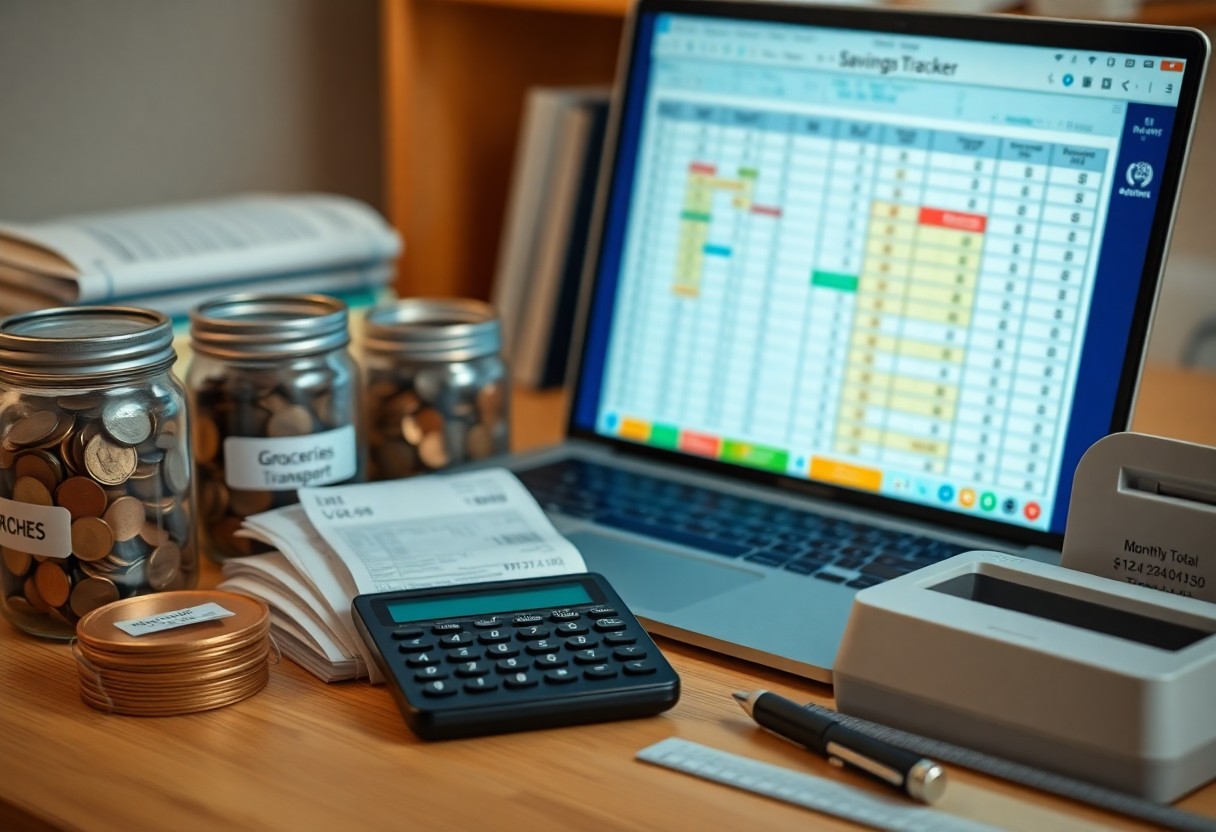
You quantify wins by turning anecdotal cuts into KPIs: baseline spend, monthly saved, percentage reduction, and payback period. Track both one-off and recurring savings-a renegotiated vendor contract that trims $3,000/year differs from a $25 one-time coupon-then annualize recurring wins. Use simple dashboards (Google Sheets or a BI tool) that show cumulative savings, average ROI per tactic, and forecasted impact so you can prioritize tactics that return the most dollars per hour invested.
Simple ROI, budgeting, and tracking methods
Calculate ROI as (savings − cost)/cost and express it as a percentage-for example, a $1,500 annual saving from a $500 tool is 200% ROI. Budget 5-10% of projected savings to test tools or services, log each tactic with columns for date, type, one-off vs recurring, monthly impact, and owner, and reconcile monthly. Combine Mint or YNAB for personal flows and a shared Google Sheet or Airtable for team-wide tracking to keep audits and alerts visible.
Turning one-off wins into repeatable systems
Capture every win in a one-page SOP: trigger, step-by-step actions, negotiation scripts, templates, and owner. For instance, a single supplier negotiation that saved $3,000 on a $20,000 contract becomes a repeatable play across five suppliers for a potential $15,000 gain if you standardize outreach and timing.
Build a “Savings Playbook” that includes the exact email subject lines, decision criteria, required documents, and a time-to-complete estimate so you can train others quickly. Run small experiments (A/B outreach, 30/60-day timing) to measure hit rate and average savings; if hit rate is 40% and average win is $600, expect $240 per attempt. Automate task creation with Zapier or similar, store templates in a shared folder, and track metrics like savings per hour and payback period to prioritize which plays to scale first.
Conclusion
The right blend of strategy and tools lets you turn ordinary purchases into substantial savings; by tracking prices, using coupons and loyalty benefits, timing buys, and choosing value over impulse, you refine your buying habits so your everyday spending yields outsized returns and protects your budget over time.


