
Most gifting moments pressure you to pick the perfect item, yet digital gift cards consistently simplify your choice by offering instant delivery, broad retailer options, and easy personalization; they save you time, reduce returns, and give recipients freedom while you retain thoughtful control over the experience.
What are digital gift cards?
Digital gift cards are electronic stored-value credentials-unique alphanumeric codes, QR passes, or wallet tokens-that let you send prepaid credit for a retailer or service. Retailers like Amazon, Starbucks, and Target issue e-gifts in denominations from $5 to $500; many report double-digit annual growth in digital redemptions as buyers favor instant, trackable gifts and last-minute gifting convenience.
Definitions and core components
Each card combines a monetary value, a unique redemption code or barcode, branding and terms of use; some include expiry dates or regional restrictions. You’ll often see metadata like SKU, activation date, and transaction history tied to your account; merchant systems map codes to balances so the cashier or online checkout deducts amounts in real time.
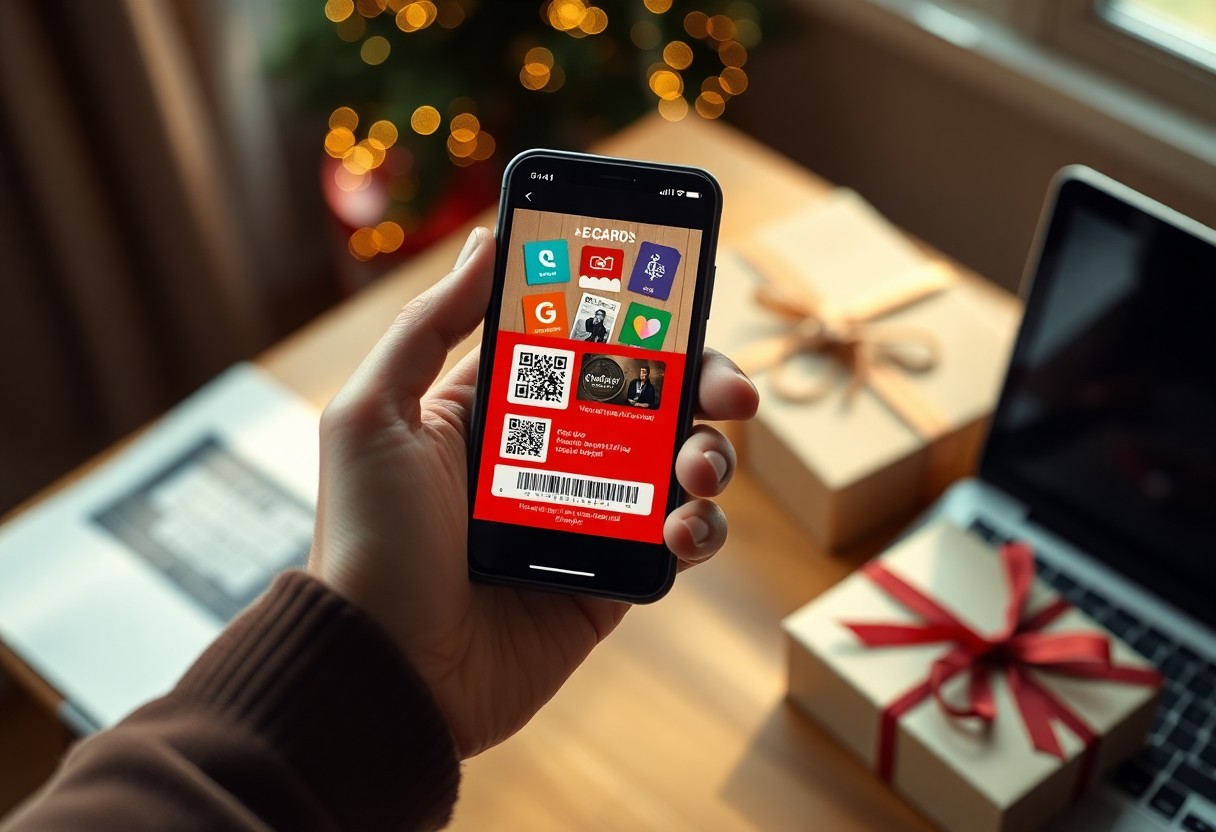
Delivery methods: email, SMS, apps, and codes
Email sends a voucher or PDF and works well for scheduled gifts; SMS reaches recipients directly-with open rates above 90%-so it’s ideal for instant delivery. Apps add wallet passes (Apple Wallet, Google Pay) and in-app balances; raw codes can be pasted at checkout or scanned from a screen, giving you flexible redemption paths across channels.
Channels differ in speed, security and conversion: email supports rich messaging and attachments, while SMS drives immediate opens and higher redemption rates; app-based cards enable NFC and loyalty integration (for example, Starbucks ties e-gifts to your app balance), and alphanumeric codes integrate easily with POS or e-commerce platforms like Shopify and Square for scheduled, automated fulfillment.
Why they’re considered effortless
They remove shipping, wrapping and calendar stress: you buy a digital card in minutes and send it instantly by email, SMS or app. Major retailers like Amazon, Starbucks and Walmart let you schedule deliveries, and corporate platforms automate bulk gifts for hundreds of employees. Because recipients redeem directly online or via mobile wallets, you avoid returns and compatibility issues that come with physical presents.
Instant delivery and last‑minute convenience
Send a gift and it can arrive within seconds by email or SMS, so you can rescue forgotten birthdays or last‑minute corporate needs. Some services promise delivery in under 60 seconds and let you schedule future sends; others provide QR codes for immediate in‑store scanning. You get instant confirmation and tracking, removing uncertainty about whether the gift arrived.
Flexible redemption and wide merchant coverage
You can choose closed‑loop e-gift cards for specific brands or open‑loop Visa/Mastercard e-gifts that work wherever those networks are accepted. Many retailers let you spend partially, reload balances and use digital wallets, so your recipient isn’t forced into one purchase. Examples include using an Amazon e-card online or a Visa e-gift at a grocery checkout.
When you dig deeper, the open‑loop vs closed‑loop distinction explains the flexibility: open‑loop e-gifts function like prepaid credit and are accepted at most merchants that process Visa/Mastercard, while closed‑loop cards lock value to a single retailer but often add perks such as promotional bonuses. You’ll also find tools that aggregate balances, allow split payments across multiple e-gifts and display real‑time balances in apps-features that boost redemption rates and cut post‑gift support work for you or your HR team.
Benefits for givers and recipients
You get instant, trackable gifting that removes postage delays and awkward returns while the recipient gains flexible redemption and easy budgeting. For example, you can schedule delivery seconds before a celebration, split a single gift among multiple merchants, or use corporate bulk codes that scale to hundreds of employees. Retailers’ reporting tools let you monitor redemption rates and top-performing promotions, turning a one-off present into measurable marketing value for both parties.
Personalization, choice, and reduced decision fatigue
You tailor every gift with custom messages, branded designs, and precise amounts, while the recipient enjoys choice-selecting size, color, experience, or swapping brands. Platforms like Giftly and major retailers let multiple contributors add funds, and some let recipients convert balances to bank transfers or store credit. That flexibility means you avoid agonizing over tastes, and your recipient spends the gift where it genuinely fits their needs.
Cost‑efficiency and environmental advantages
You eliminate printing, packaging, and fulfillment costs, often reducing per-gift overhead by up to 90% versus physical cards; digital delivery also removes last-mile shipping fees and returns. Environmentally, sending an e‑card prevents plastic PVC production and bulky mailers, cutting waste and the CO2 associated with transportation-benefits that add up quickly for frequent gifters and companies issuing thousands of cards annually.
Putting numbers to impact, a single small parcel can emit roughly 0.2-0.6 kg CO2, so avoiding physical mail for mass gifting materially lowers emissions when scaled across campaigns. You also sidestep manufacturing and landfill burdens from PVC cards, which many recycling systems won’t accept, and reduce inventory and storage costs for retailers-translating to both immediate savings and long-term sustainability gains for your gifting programs.
Risks and limitations
You encounter several trade-offs: fraud and scams, expiration and fee rules, merchant limits, and a sometimes impersonal feel. Scammers target gift cards with social‑engineering schemes, while legal protections (like the CARD Act) only go so far. Activation fees, geo‑restrictions, and one‑brand limits can turn a convenient gift into a hassle for your recipient, so you need to vet card type and terms before buying.
Fraud, scams, expiration and fees
You should watch for common scams-IRS, tech‑support, and romance frauds often demand payment in gift cards-and for tampering at point‑of‑sale. Regulators note frequent complaints, and the CARD Act of 2009 requires most gift cards to remain valid at least five years and limits some fees. Still, prepaid Visa/Mastercard activation fees typically run $3.95-$6.95, and phishing schemes continue to generate substantial consumer losses.
Restrictions, merchant compatibility, and perceived impersonality
You’ll face compatibility limits: store‑specific cards (Amazon, Starbucks, Sephora) work only within that ecosystem, while network cards (Visa/Mastercard/Amex) accept broader merchants but often carry activation fees or transaction blocks. Many recipients view plain gift cards as impersonal, so pairing them with a note or a curated suggestion list increases perceived value and reduces the “lazy gift” stigma.
You can mitigate limits by checking terms: some digital cards are online‑only, others require account registration or geo‑locking, and certain issuers block recurring payments or gambling purchases. Several states (e.g., California, New York) ban dormancy fees, and issuers must disclose fees and expiration dates. For more personalization, use e‑gifts that allow video messages, select a card aligned to the recipient’s interests, or use corporate gifting platforms that offer vendor choice and branded packaging.
Best practices for buying and sending
Selecting reputable issuers and secure platforms
You can verify reputation by choosing issuer-backed cards (Amazon, Apple, Visa/Mastercard prepaid) and vendors with SSL, two-factor authentication, clear refund/redemption policies, and transaction receipts. Check fees, expiration and regional locks before purchase, read seller reviews and BBB ratings, and prefer platforms that offer buyer protection or chargeback options to reduce the risk of fraudulent codes.
- Confirm HTTPS, visible contact information, and published terms of service.
- Prefer marketplace or issuer verification badges and high review counts.
- Compare fee structures and check for hidden activation or service charges.
- Keep receipts, order IDs, and screenshots to support disputes if needed.
- Thou should verify seller reviews and dispute channels if a code doesn’t work.
Presentation, messaging, and timing tips
You can elevate impact by writing a 25-50 word personalized message referencing a shared memory or plan, scheduling delivery for the recipient’s morning or event start, and including clear redemption steps. Use branded e-cards or animated templates, attach a PDF backup of the code, and suggest denominations like $25-$100 for casual gifts or $100+ for milestones to guide senders.
- Use a concise subject line that avoids spam triggers and signals a gift.
- Include explicit redemption instructions and any expiration dates in the message.
- Schedule delivery with the platform’s scheduler to hit local morning or event time.
- Attach a backup screenshot or PDF of the code in case the email client strips content.
- Thou should tailor tone-warm for friends, formal for colleagues-and match gift amount to occasion.
You can go further by using platforms like Sendoso, Giftagram, or GiftRocket, which let you schedule deliveries, add custom landing pages, and track opens; some services allow scheduling up to a year in advance for recurring campaigns. Test a sample send, confirm time zones, and include a short CTA (redeem link + support contact) to reduce friction and increase on-time redemption.
- Test-send to a secondary address to verify formatting and links before bulk sends.
- Provide a clear customer-support contact and balance-check instructions in the same message.
- Set automated reminders one week before long-term expirations for unused balances.
- Use A/B testing on subject lines and templates for high-volume or corporate gifting.
- Thou must proofread messages and confirm time zones when scheduling across regions.
Market trends and the future of gifting
Mobile-first behavior is reshaping gifting: three dominant delivery channels-email, SMS, and mobile wallets-now handle most digital gift cards, and retailers such as Starbucks and Amazon report double‑digit year‑over‑year growth in digital sales. Platforms like Shopify, Stripe, and Square provide APIs so you can issue and revoke cards instantly, while data-driven targeting lets brands increase relevance through personalized denominations and timing.
Mobile wallets, QR codes, and real‑time delivery
Apple Wallet, Google Wallet, and Samsung Wallet let you store gift cards on-device; QR codes enable contactless redemption at POS terminals worldwide. Developers tap Stripe, Shopify, and Square APIs to deliver codes in real time, so your recipient can receive and spend a card within seconds. Pilot programs show lower abandonment and faster checkout when wallet and QR options are offered.
Integration with loyalty programs and experiential offerings
When you tie gift cards to loyalty programs, redemptions can trigger points, tier progress, or targeted offers that drive repeat behavior. Brands like Starbucks and Sephora link in‑app cards to rewards to increase spend frequency, and experiential bundles-cooking classes, spa appointments, concert tickets-let you sell higher‑margin combinations that enhance perceived value.
From a technical view, you map a gift card to a single customer profile, use webhooks to mark redemptions, and automate point awards so your CRM stays synchronized. For example, Starbucks lets you reload a card in‑app and still earn Stars when you pay; implementing this requires tokenized wallet passes, loyalty APIs, and real‑time reconciliation to prevent double crediting and ensure accurate reward fulfillment.
Summing up
The convenience, flexibility and instant delivery of digital gift cards make them the unsung heroes of effortless gifting: they let you set precise budgets, offer recipients true choice, cut wasteful packaging, and solve last-minute needs, so you can deliver thoughtful, timely presents with minimal friction and better tracking.