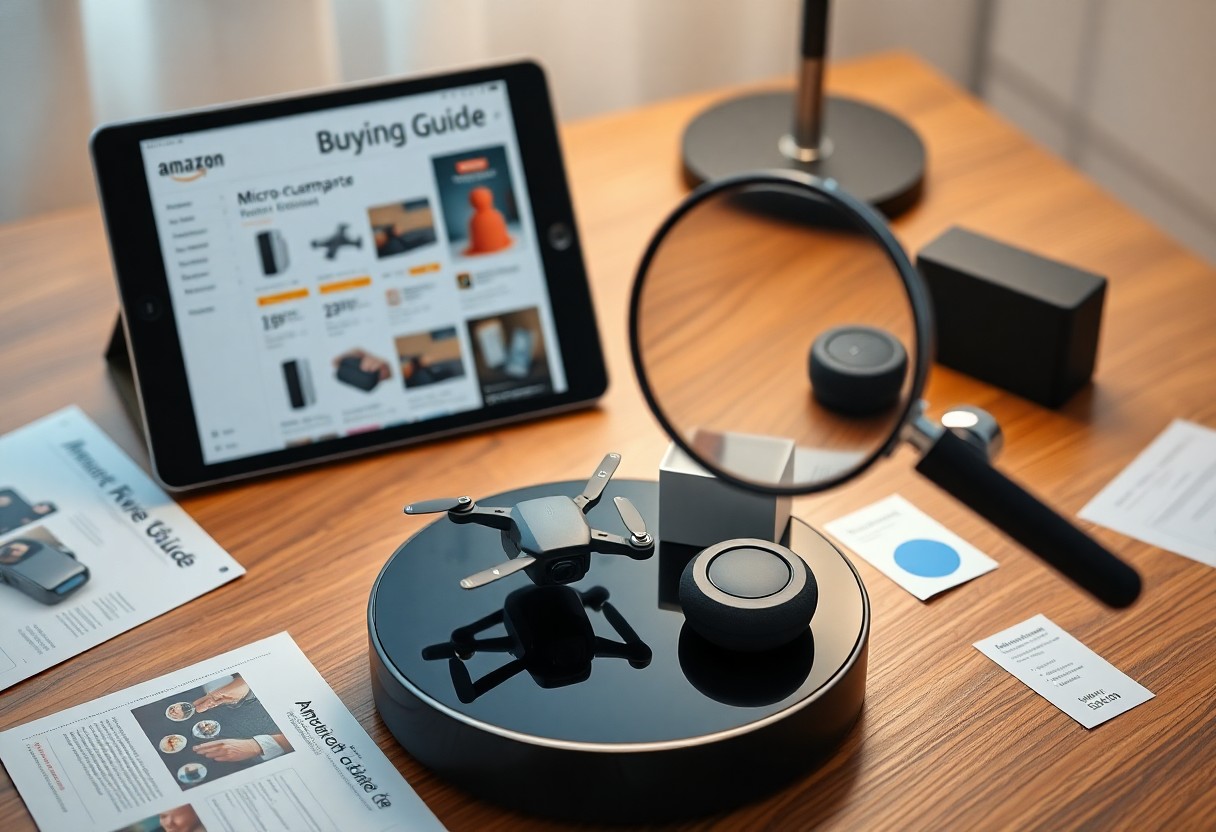

There’s a surprising number of enigmatic tech gadgets on Amazon that can truly upgrade your daily routine; you need a clear method to separate hype from genuine value, and this guide shows how to evaluate specs, user reviews, seller credibility, and long-term support so you can confidently spot the hidden gems that match your needs and budget.
Defining “Enigmatic” Tech Gadgets
When you spot an enigmatic gadget on Amazon, you’re looking at a narrowly engineered device-like a single‑channel USB oscilloscope or a pocket thermal label printer-that solves a specific problem for a small group of users; manufacturers often produce between 100-1,000 units, listings gather under 50 reviews, and distribution is patched together via niche retailers, Kickstarter backers, or direct sales from maker platforms.
Key characteristics: niche functions, unconventional design, limited branding
You can recognize these by their single‑purpose features (Eurorack synth modules, boutique headphone DACs, programmable macro pads), odd form factors that ignore mainstream ergonomics, and minimal branding-often sold under OEM part numbers or a maker’s handle rather than a polished consumer name, which makes your searches miss them unless you know exact terms.
Reasons they remain obscure: small runs, niche audiences, weak marketing
Often their obscurity stems from tiny production runs, audiences measured in hundreds rather than thousands, and minimal marketing budgets; sellers rarely invest in Amazon SEO, paid ads, or PR, so your typical discovery path-search, bestseller lists, influencer reviews-doesn’t surface them, leaving those products hidden in long‑tail search results with very few user reviews.
Drilling down, you find concrete business constraints: many makers are one‑ to three‑person shops running PCB batches of 100-500 units, Kickstarter projects that raise $5k-$50k, and sellers who skip expensive compliance testing for wireless or medical categories because certification can cost thousands; combined with ASIN fragmentation (same item split across multiple listings) and reliance on forums or niche marketplaces, your chances of stumbling on these gadgets by casual browsing are slim unless you follow specialized channels.
How Amazon Buying Guides Surface Products
Amazon buying guides pull together algorithmic metrics, advertiser bids, and editorial decisions to decide what you see; the A9-driven mix weighs sales velocity, conversion rate, review count and relevancy, while Sponsored Products and vendor deals can boost visibility. You’ll notice items with high average ratings, thousands of reviews, or a sudden sales spike often rise to the top, and editorial selections can override data-driven lists when Amazon wants to spotlight a category trend.
Algorithmic signals, sponsored placements, and editorial picks
A9 and its ranking signals prioritize conversion rate, sales rank, keyword relevance and review volume, so you’ll find fast-selling or highly-clicked items surfacing more. Sponsored placements-bids for “Sponsored” ad slots-can push newer brands into guide slots, and Amazon’s editorial teams add curated picks or seasonal collections, which may feature vendor-promoted products alongside organic winners.
Differences between Amazon-curated guides and third-party roundups
Amazon-curated guides emphasize live marketplace signals and ad inventory, whereas third-party roundups like Wirecutter or TechRadar typically publish hands-on testing, declared methodologies, and conflict-of-interest disclosures; when you consult a third-party roundup you’re more likely to see described test protocols, lab data and long-form comparisons rather than real-time sales-driven rankings.
To dig deeper, compare update cadence and transparency: Amazon guides refresh with sales and ad changes in near real-time, so you’ll get the current best-sellers but not always rigorous testing notes. Third-party reviews usually state sample sizes, test conditions (battery life cycles, measured frequency response, durability stress tests) and publish revision dates, helping you judge whether a top pick passed quantitative evaluation or simply captured market momentum.
Identifying Hidden Gems: Practical Criteria
To spot hidden gems you filter beyond average ratings: examine 3-5 star distribution, verified-purchase share, return rate under 5%, warranty length, and review velocity. Cross-reference benchmark results and seller longevity; products with a steady 4.2+ average from 200+ verified buyers and consistent low returns typically indicate reliable value rather than temporary hype.
Performance, build quality, and unique feature sets
Check sustained benchmarks and thermal behavior-devices that keep ≥90% of peak performance after 30-minute stress tests outperform in real use. You prefer durable materials (aluminum unibody, IP67) and measured specs such as 200-700 ANSI lumens for portable projectors or 70-80 dB ratings for vacuums; distinctive features like modular batteries, open APIs, or brand-backed accessories (Anker, Wyze examples) often separate hidden winners.
Price-to-value indicators and longevity considerations
You weigh MSRP versus street price and compute cost-per-year by dividing purchase price by expected service life (commonly 2-5 years for small electronics). Look for warranties ≥1 year, battery longevity (Li‑ion tends toward ~80% capacity after 300-500 cycles), and storage endurance ratings (consumer SSDs often list 100-600 TBW) as signals of long-term value.
For a concrete view, a $150 robot vacuum with a 3-year expectancy equals $50/year, but $15 quarterly filter replacements add $60/year to ownership costs. You should also factor firmware-update cadence (2-4+ years of updates), accessory availability, and active online communities; combining those with replacement-part pricing gives a more accurate true cost of ownership and resale prospects.
Categories Where Enigmatic Gadgets Thrive
Hidden gems concentrate where specificity meets utility: smart‑home modules, audio peripherals, wearable health tech, photo and field‑recording accessories, and niche hobbyist controllers. You’ll find devices that solve one oddball problem-Zigbee relays for legacy lamps, pocket recorders for indie journalists, or modular MIDI controllers for live performers-often priced between $15 and $250, with loyal followings and deep user reviews that reveal real-world quirks and integration tips.
Smart home/IoT curiosities and automation gadgets
In this niche you encounter Matter, Zigbee, Z‑Wave and Wi‑Fi devices that bridge ecosystems: Shelly relays and Aqara sensors for DIY automations, Philips Hue and IKEA TRÅDFRI for lighting scenes, and Home Assistant which now supports 2,000+ integrations. You can automate blinds, irrigation, or battery‑powered sensors that report temperature and occupancy; many sensors cost $15-$60, while aftermarket relays and smart switches run $20-$80, letting you tailor automations beyond mainstream bundles.
Audio, peripherals, wearables, and specialist accessories
These gadgets reward focused buyers: USB‑C DACs that decode 24‑bit/192kHz audio, Bluetooth codecs like LDAC at up to 990 kbps/24‑bit/96kHz, gaming mice with 16,000+ DPI sensors, and hot‑swappable mechanical keyboard kits with 50M‑actuation switches. Wearables such as Oura rings or multisport Garmins offer multi‑day battery life and advanced metrics, while field tools-RØDE Wireless GO II, Zoom H5-serve creators who need portable, reliable capture under $300.
If you want practical examples, pairing a $50 USB‑C DAC can eliminate laptop hiss and unlock 24/96 playback, and swapping to a hot‑swappable keyboard kit often improves typing feel for $80-$150. For creators, a Zoom H5 records 24‑bit/96kHz X/Y audio for under $300, and a Wireless GO II gives wireless transmit/receive with ~7‑hour runtime; those specific gains explain why niche buyers elevate these oddities into daily tools.
Evaluation Techniques for Savvy Buyers
You should triangulate signals quickly: require at least 50 reviews before trusting averages, check verified-purchase ratios, compare recent vs. historical ratings, and run price-history checks on CamelCamelCamel or Keepa to spot artificial discounts; factor in return windows (30 days vs. 90 days), warranty length, and whether sellers ship from domestic warehouses to estimate risk and real-world cost.
Interpreting reviews, user photos, and verified purchases
When you scan reviews, prioritize verified purchases and sort by most recent; examine user photos at 200-300% zoom to confirm ports, connectors, and labels that match spec sheets; flag repeated issues-if over ~10% of recent reviews mention battery swelling or firmware bricking, treat that as a pattern rather than one-off bad luck.
Cross-referencing specs, firmware support, and manufacturer reputation
You should cross-check advertised specs against vendor datasheets and FCC filings, then search changelogs and community forums for firmware cadence-brands with 2-3+ years of regular security and feature updates tend to retain value; weigh manufacturer history (support forums, update transparency, official repair options) when choosing between an unknown OEM and an established brand.
Dig deeper by matching exact model numbers and chipset IDs (Broadcom, Qualcomm, MediaTek, Realtek) to confirm driver and community support; verify RAM/flash amounts against teardown reports or FCC exhibits; look for public firmware repositories or changelogs showing monthly/quarterly updates, and check warranty terms (1 vs. 2 years) and available replacement parts to forecast maintenance costs and longevity.
Purchasing Strategies and Risk Mitigation
Return policies, warranties, and trustworthy sellers
You can often rely on Amazon’s standard 30-day return window for new electronics, while certified refurbished items commonly carry 90-day warranties and OEM units usually include a 12-month limited warranty; check the listing for exact terms. Prioritize sellers with >95% positive feedback and clear contact info, keep order receipts and serial numbers, and use Amazon A-to-z Guarantee for unresolved third-party disputes within the claim window.
Timing deals, bundles, and post-purchase support
You should time purchases around Prime Day (July), Black Friday/Cyber Monday (late November) and holiday clearance, when electronics often drop 20-50%; bundles can shave another 10-30% but verify each component’s brand and warranty. After buying, register your device with the manufacturer, inspect and test within the seller’s return period, and file warranty or A-to-z claims promptly if issues appear.
Use concrete tactics: set price alerts with Keepa to catch dips of 15-40%, comp a bundle’s per-item cost to standalone prices, and weigh third-party protection plans (typically 10-25% of the item price) for high-cost gadgets. Note holiday purchases sometimes extend return windows by weeks, and some manufacturers void warranty if accessories are non-OEM-buy bundles from authorized resellers when the warranty matters most.
To wrap up
Upon reflecting, you should treat enigmatic tech gadgets in Amazon buying guides as potential hidden gems: assess verified reviews, compatibility with your setup, build quality, warranty and update support, and weigh unique features against price. Use hands-on user feedback and independent reviews to separate novelty from real value. If you prioritize performance and long-term support, these niche finds can offer superior utility-just verify specs and return policies before committing.
Related Posts

🚨 NEWS ALERT: The 2026 Ultimate Guide to Best SaaS Tools, Lifetime Deals, and Money-Saving Tech Tips – Mastering the Vertical and Agentic Stacks 🏆

🔮 Kindle Forecast 2026: The AI, Color, and Openness Revolution

📚 The Ultimate Amazon Kindle User Guide 2026: Mastering AI, Color E-Ink, and Digital Reading